St. Germain Elderflower Liqueur
St. Germain is a floral, aromatic liqueur that adds a delicate, sophisticated sweetness and fresh elderflower character to cocktails. It’s often used as a “bridge” — softening or lifting botanical spirits, brightening bubbly drinks, or rounding out fruit-forward mixes. It’s elegant and versatile rather than heavy or syrupy.
Origins & Craftsmanship
-
Origins: Produced in France using fresh elderflower blossoms (from Sambucus nigra), harvested once a year in late spring.
-
Harvest & Flower Count: According to the brand, up to 1,000 elderflower blossoms go into every bottle to capture the full floral aroma.
-
Base & Composition: It is a carefully balanced liqueur, combining floral and fruity tones without relying on artificial flavors.
-
Alcohol / Proof: 20% ABV (40 proof) in U.S. markets.
Tasting Profile
| Aspect | Notes & Characteristics |
|---|---|
| Appearance | Pale golden, with clarity and light viscosity. |
| Nose / Aroma | Fresh elderflower blossom, honeysuckle, pear, subtle citrus, melon, and soft floral lift. |
| Palate / Taste | Gentle and delicate—elderflower core flavor with pear, quince, light honey, floral tones, and soft fruit. The sweetness is moderate and more about aromatic impression than syrup. |
| Finish | Clean, floral-tinged, with lingering blossom and fruit echoes. The finish is neither cloying nor heavy. |
Wine Enthusiast gives it very high praise:
“The seductive bouquet offers wonderfully floral, fruity, guava- and melon-like fragrances … becoming richly pear- and quince-like following aeration.”
Serving & Pairings
-
Serve / Usage:
• Neat in small amounts, as a “floater” or modifier.
• In cocktails: Spritzes (e.g. Hugo Spritz), French Blonde, gin + St. Germain variations, or sparkling wine cocktails.
• It also works well layered or as a bright accent to otherwise heavier spirits. -
Pairings:
• Light fruit desserts: pear tart, lemon tarts, peach cobbler
• Cheese plates—soft or creamy cheeses to match its delicate profile
• Herbs and floral desserts (lavender, elderflower, basil)
• Fresh fruit, especially stone fruits
• As a complement to lighter aperitifs or sparkling wines
Cocktail recipes
1. St. Germain Spritz (a.k.a. Hugo Spritz)
A light, bubbly aperitif.
-
1 ½ oz St. Germain Elderflower Liqueur
-
3 oz Prosecco (or any dry sparkling wine)
-
2 oz Soda water
-
Garnish: Fresh mint sprig + lime wheel
Build in a large wine glass over ice. Stir gently.
2. French Blonde
A floral, slightly bitter gin cocktail.
-
1 oz Gin
-
1 oz St. Germain
-
1 oz Lillet Blanc (or Cocchi Americano)
-
2 oz Fresh grapefruit juice
-
Dash of lemon bitters
Shake with ice, strain into a coupe. Garnish with a grapefruit twist.
3. Elderflower Collins
A twist on the Tom Collins.
-
1 ½ oz Gin
-
1 oz St. Germain
-
¾ oz Fresh lemon juice
-
Soda water to top
-
Garnish: Lemon wheel + cherry
Shake gin, St. Germain, and lemon juice with ice. Strain into a tall glass, top with soda, garnish.
4. Champagne & St. Germain
An elegant party pour.
-
½ oz St. Germain
-
4 oz Brut Champagne or sparkling wine
-
Garnish: Lemon twist
Pour St. Germain into a flute, top with chilled Champagne, garnish.
5. Elderflower Margarita
A floral twist on the classic.
-
2 oz Tequila blanco
-
¾ oz St. Germain
-
¾ oz Fresh lime juice
-
¼ oz Agave nectar (optional, for extra sweetness)
-
Garnish: Salt rim + lime wedge
Shake with ice, strain into a rocks glass with fresh ice.
6. St. Germain Gin & Tonic
Floral uplift to a classic highball.
-
2 oz Gin
-
½ oz St. Germain
-
4 oz Tonic water
-
Garnish: Cucumber slice + fresh herbs (thyme, basil, or mint)
Build in a tall glass with ice, stir gently.
🌸 Pro tip: Because St. Germain is delicate, a little goes a long way. It’s usually used between ½ oz and 1 oz as an accent.
Description
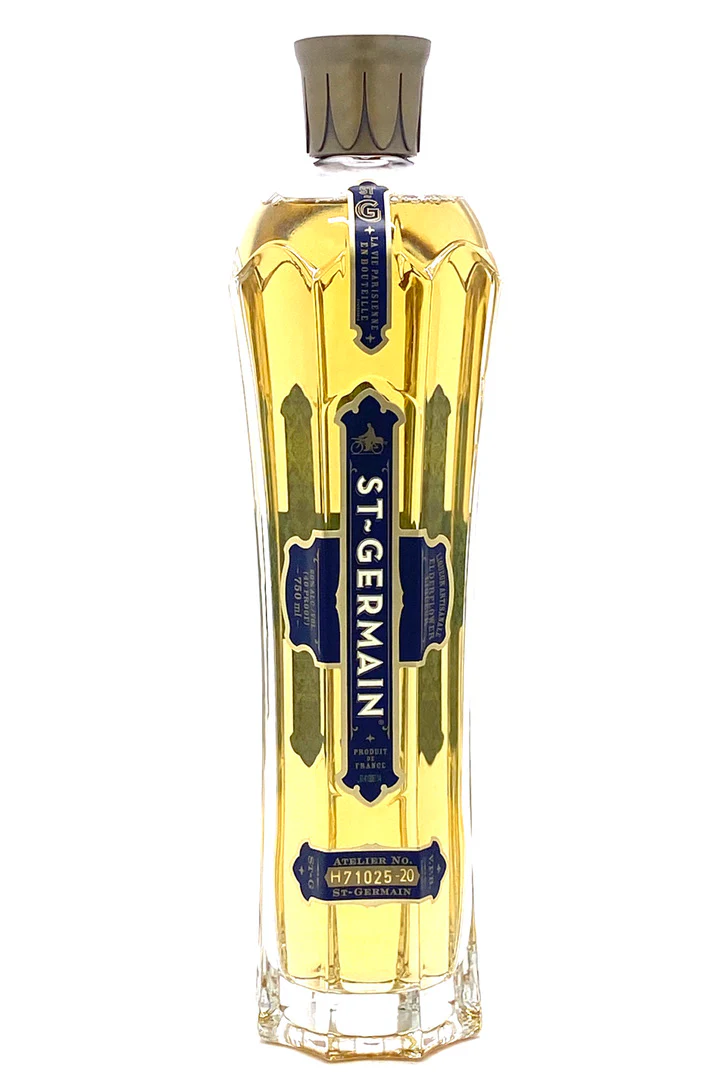
St. Germain is a floral, aromatic liqueur that adds a delicate, sophisticated sweetness and fresh elderflower character to cocktails. It’s often used as a “bridge” — softening or lifting botanical spirits, brightening bubbly drinks, or rounding out fruit-forward mixes. It’s elegant and versatile rather than heavy or syrupy.
Origins & Craftsmanship
-
Origins: Produced in France using fresh elderflower blossoms (from Sambucus nigra), harvested once a year in late spring.
-
Harvest & Flower Count: According to the brand, up to 1,000 elderflower blossoms go into every bottle to capture the full floral aroma.
-
Base & Composition: It is a carefully balanced liqueur, combining floral and fruity tones without relying on artificial flavors.
-
Alcohol / Proof: 20% ABV (40 proof) in U.S. markets.
Tasting Profile
| Aspect | Notes & Characteristics |
|---|---|
| Appearance | Pale golden, with clarity and light viscosity. |
| Nose / Aroma | Fresh elderflower blossom, honeysuckle, pear, subtle citrus, melon, and soft floral lift. |
| Palate / Taste | Gentle and delicate—elderflower core flavor with pear, quince, light honey, floral tones, and soft fruit. The sweetness is moderate and more about aromatic impression than syrup. |
| Finish | Clean, floral-tinged, with lingering blossom and fruit echoes. The finish is neither cloying nor heavy. |
Wine Enthusiast gives it very high praise:
“The seductive bouquet offers wonderfully floral, fruity, guava- and melon-like fragrances … becoming richly pear- and quince-like following aeration.”
Serving & Pairings
-
Serve / Usage:
• Neat in small amounts, as a “floater” or modifier.
• In cocktails: Spritzes (e.g. Hugo Spritz), French Blonde, gin + St. Germain variations, or sparkling wine cocktails.
• It also works well layered or as a bright accent to otherwise heavier spirits. -
Pairings:
• Light fruit desserts: pear tart, lemon tarts, peach cobbler
• Cheese plates—soft or creamy cheeses to match its delicate profile
• Herbs and floral desserts (lavender, elderflower, basil)
• Fresh fruit, especially stone fruits
• As a complement to lighter aperitifs or sparkling wines
Cocktail recipes
1. St. Germain Spritz (a.k.a. Hugo Spritz)
A light, bubbly aperitif.
-
1 ½ oz St. Germain Elderflower Liqueur
-
3 oz Prosecco (or any dry sparkling wine)
-
2 oz Soda water
-
Garnish: Fresh mint sprig + lime wheel
Build in a large wine glass over ice. Stir gently.
2. French Blonde
A floral, slightly bitter gin cocktail.
-
1 oz Gin
-
1 oz St. Germain
-
1 oz Lillet Blanc (or Cocchi Americano)
-
2 oz Fresh grapefruit juice
-
Dash of lemon bitters
Shake with ice, strain into a coupe. Garnish with a grapefruit twist.
3. Elderflower Collins
A twist on the Tom Collins.
-
1 ½ oz Gin
-
1 oz St. Germain
-
¾ oz Fresh lemon juice
-
Soda water to top
-
Garnish: Lemon wheel + cherry
Shake gin, St. Germain, and lemon juice with ice. Strain into a tall glass, top with soda, garnish.
4. Champagne & St. Germain
An elegant party pour.
-
½ oz St. Germain
-
4 oz Brut Champagne or sparkling wine
-
Garnish: Lemon twist
Pour St. Germain into a flute, top with chilled Champagne, garnish.
5. Elderflower Margarita
A floral twist on the classic.
-
2 oz Tequila blanco
-
¾ oz St. Germain
-
¾ oz Fresh lime juice
-
¼ oz Agave nectar (optional, for extra sweetness)
-
Garnish: Salt rim + lime wedge
Shake with ice, strain into a rocks glass with fresh ice.
6. St. Germain Gin & Tonic
Floral uplift to a classic highball.
-
2 oz Gin
-
½ oz St. Germain
-
4 oz Tonic water
-
Garnish: Cucumber slice + fresh herbs (thyme, basil, or mint)
Build in a tall glass with ice, stir gently.
🌸 Pro tip: Because St. Germain is delicate, a little goes a long way. It’s usually used between ½ oz and 1 oz as an accent.